
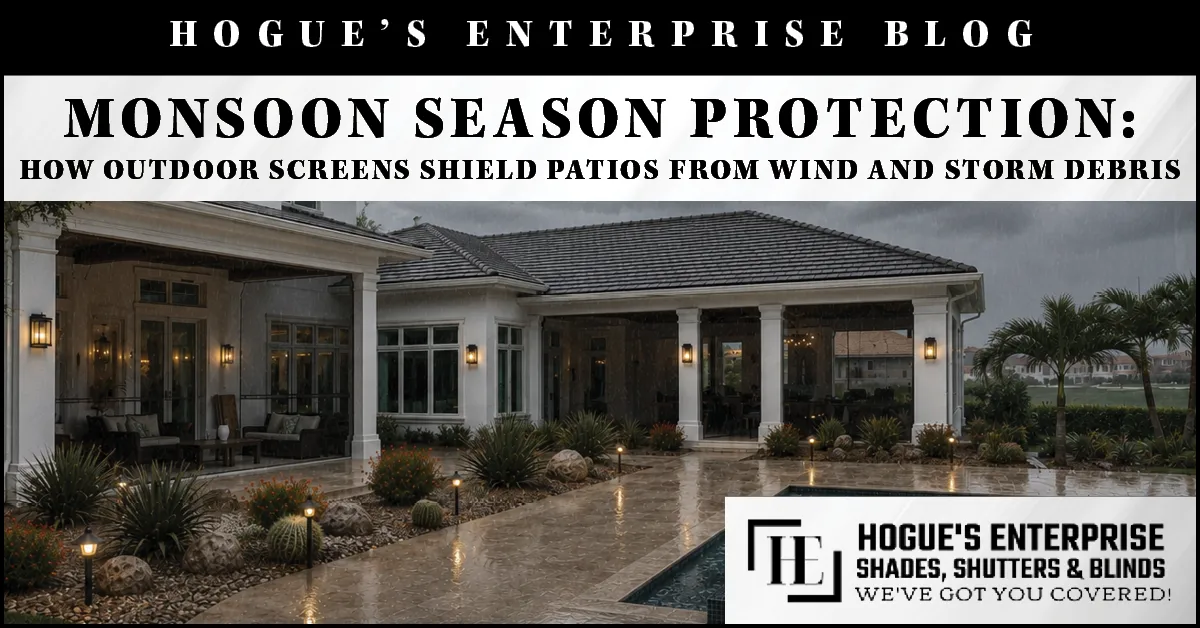
The Arizona monsoon season brings a combination of weather conditions that can make outdoor living spaces difficult to enjoy and costly to maintain. According to the National Weather Service, monsoon hazards across the Southwest cause tens of millions of dollars in property damage every year.
Dust storms, high winds, flash flooding, intense UV, and the insects that follow all of it are part of life here. After over 60 years of helping Arizona homeowners protect their outdoor spaces, we have seen firsthand what monsoon season does to a patio that is not properly prepared. Here’s what to do before the season arrives.
Secure What You Have
Start by walking through your outdoor space and identifying anything that high winds could turn into a hazard. Cushions, decorative items, potted plants, and lightweight furniture should be stored inside or properly secured before storms arrive. Anything that can move in a strong gust will.
Check Your Drainage
Standing water after a storm is one of the most common complaints we hear from Arizona homeowners. Before monsoon season begins, inspect the drainage around your patio or outdoor structure and make sure there is a clear path for water to move away from your foundation, furniture, and outdoor electronics. Clogged drains or poor grading can turn a moderate storm into significant damage.
Inspect Your Outdoor Structure
If you have a covered patio, pergola, or shade structure, check it over before the season begins. Look for loose hardware, worn fabric, or early signs of rust or corrosion on any metal components. A small issue caught in June is far less costly than a structural failure in August.
Install the Right Screens for Every Weather Condition
The most effective thing you can do to protect your outdoor space ahead of monsoon season is to install the right screening system. The MagnaTrack screens we install are built specifically for Arizona conditions and address every major monsoon weather threat. Here is how each screen type matches up to what the season brings.
Dust Storms and Haboobs
Dust storms can reach between 40 and 60 mph, and a wall of fine desert dust can settle into every corner of your outdoor space within minutes, coating furniture, flooring, and fabrics in a layer that takes hours to clean. MagnaTrack screens create a tight, sealed barrier around your patio or outdoor space that keeps fine dust out during even the most intense haboobs. When a dust storm rolls in, you lower the screens, let it pass, and your space stays clean.
High Winds
Monsoon thunderstorm winds in Arizona can exceed 60 mph, and in more severe storms, they can top 100 mph over a fairly large area. That kind of force can send lightweight outdoor furniture airborne and cause serious damage to uncovered spaces.
For high wind protection, the MagnaTrack Defender Hurricane Screens we install are the right solution. They are built for unparalleled impact absorption from Category 5 winds exceeding 157 mph, which means Arizona’s monsoon gusts are well within what these screens are designed to handle. Tested to meet Miami-Dade (Florida) Category 5 hurricane codes, they hold their position without warping, tearing, or pulling out of track, even during the most severe wind events the monsoon season produces.
Heavy Rain
Phoenix averages 2.43 inches of precipitation during monsoon season, and much of that falls in short, intense bursts. Even covered patios can take on wind-driven rain that soaks furniture and damages flooring.
MagnaTrack vinyl screens are custom-fitted to your specific opening with no gaps, which means rain driven sideways by the wind stays outside where it belongs. Your outdoor furniture, rugs, and cushions stay dry, and your space is ready to use again as soon as the storm clears.
Heat and UV Exposure
Monsoon season begins during one of the hottest stretches of the year in Arizona. Even as moisture increases through July and August, temperatures remain intense and UV exposure stays high.
MagnaTrack solar screens block between 70–97% of harmful UV rays while still allowing airflow, keeping your outdoor space noticeably cooler and protecting your furniture and fabrics from the sun damage that breaks them down over time.
Insects
Standing water left behind after monsoon storms creates ideal breeding conditions for mosquitoes, flies, and noseeums. If your outdoor space is open, the difference is noticeable within days of a storm.
The MagnaTrack insect screens we install are designed to safeguard against insects while maximizing airflow through your space. For flies and mosquitoes, the 16×14 mesh is the right fit. For noseeums and very small insects, the 17×20 mesh provides a tighter barrier that keeps even the smallest bugs out. Both options are remote controlled and available in black, with white also available on the 16×14 mesh, so the screen integrates cleanly with your home’s exterior.
The Right Screen for Every Part of Monsoon Season
One of the advantages of the MagnaTrack system is that different screen types can be combined or selected based on what your space needs most. Whether that’s vinyl screens for dust, Defender Hurricane Screens for rain and wind, solar screens for heat and UV, or insect screens for post-storm bug control, every screen is custom-fitted to your specific opening and installed by our team with the same quiet, smooth motorized operation. The patented self-correcting magnetic track system virtually eliminates the jams and service issues common in conventional screens, so whichever screen you choose, it works reliably every time you need it.
Monsoon season puts Arizona outdoor spaces through a lot between June and September. The right screens make it manageable and keep your space usable throughout one of the most demanding stretches of the year.
Protect your outdoor space before monsoon season is in full swing. Fill out the form at hoguesenterprise.com to get your free quote. We’ll help you choose the right MagnaTrack screen system so you can enjoy your patio through Arizona’s toughest weather.